
How to Calm an Anxious Puppy: A Complete Guide for New Pet Parents
Bringing a puppy home is joyful — and, for the puppy, quietly terrifying. She has just left her mother, her littermates and every smell she ever knew. Whining at night, pacing when you pick up your keys, trembling at a door slam: these aren't "bad behavior," they're signs of a nervous system still learning that the world is safe. Here's how to help, step by step.
1. Understand What Puppy Anxiety Actually Is
Anxiety in puppies usually falls into three buckets: separation anxiety (distress when left alone), noise sensitivity (fear of thunder, fireworks, vacuum cleaners) and environmental anxiety (new places, people, other animals). Puppies go through critical socialization windows before 16 weeks — gentle, positive exposure during this period prevents most adult fears. But if you've adopted an older puppy or rescue, don't worry: the strategies below work at any age.
2. The First Nights: Solving Crate and Bedtime Whining
The first week of nights is when most new pet parents break down. The puppy cries; you want to comfort her. Do it right:
- Keep the crate in your bedroom for the first 1–2 weeks. Your presence and scent are calming, and you can respond before panic escalates.
- Simulate a heartbeat and warmth. Puppies settle fastest when they feel a companion beside them. A plush toy with a simulated heartbeat module mimics littermates — this is exactly why we designed our Heartbeat Comfort Plush.
- Tire her out before bed. A calm 15-minute sniffing session in the yard works better than rough play.
- Never punish whining. It increases distress. Ignore mild fussing; respond to genuine panic.
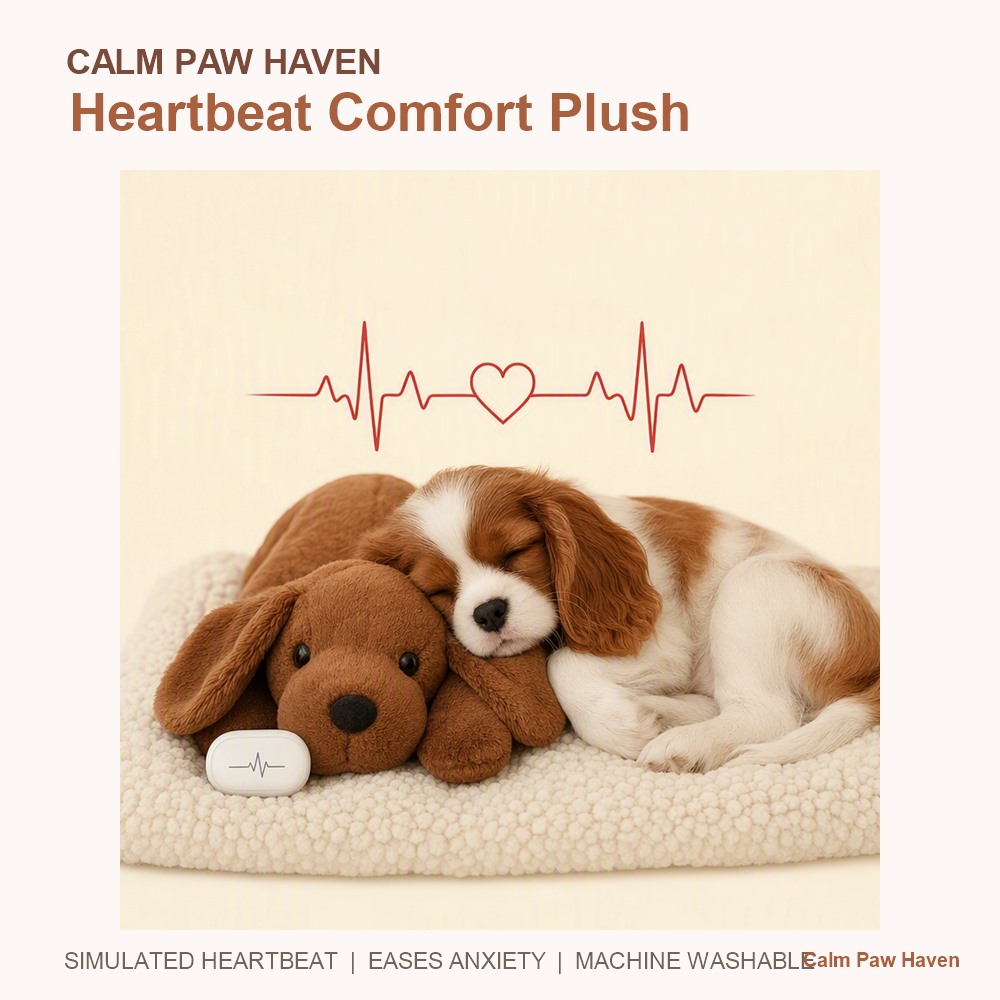
Heartbeat Comfort Plush
A soft cuddly friend with a simulated heartbeat that helps puppies sleep through the night. Learn more →
3. Separation Anxiety: Teaching "Alone Is Okay"
Start smaller than you think. Leave the room for 10 seconds, return before she whines, reward calm behavior. Gradually extend to minutes, then an hour. Golden rules:
- Downplay departures and arrivals. Dramatic goodbyes teach your puppy that leaving is a big deal.
- Leave an engaging activity. A snuffle mat with hidden breakfast keeps her nose busy for 10–15 minutes — sniffing releases calming hormones and naturally lowers stress.
- Practice when you're home. Have her settle on her bed while you move around; alone-training doesn't require leaving the house.
4. Mental Enrichment: The Most Underrated Calmer
A tired mind is a calm dog. Ten minutes of sniffing, foraging and problem-solving tires a puppy as much as a 30-minute walk — without the adrenaline. Rotate 2–3 enrichment activities daily: treat scattering, puzzle feeders, snuffle mats, short training sessions. Boredom is anxiety's best friend; enrichment is the quiet fix.
5. When to Seek Professional Help
If your puppy destroys crates, self-injures, refuses food when alone, or shows fear that worsens over weeks, consult your veterinarian or a certified behaviorist. Medication combined with training is sometimes the kindest path — it's not a failure, it's a tool.
The Takeaway
Calm puppies aren't born — they're built, one safe night and one quiet departure at a time. Give her warmth, give her nose a job, and be boringly consistent. She'll get there.
Going deeper: if your dog struggles specifically when you leave the house, our new guide Separation Anxiety Training: How to Leave Your Dog Alone Without Guilt walks through the full desensitization plan, step by step.
Have questions about your anxious pup? Message us — we reply within 24 hours.