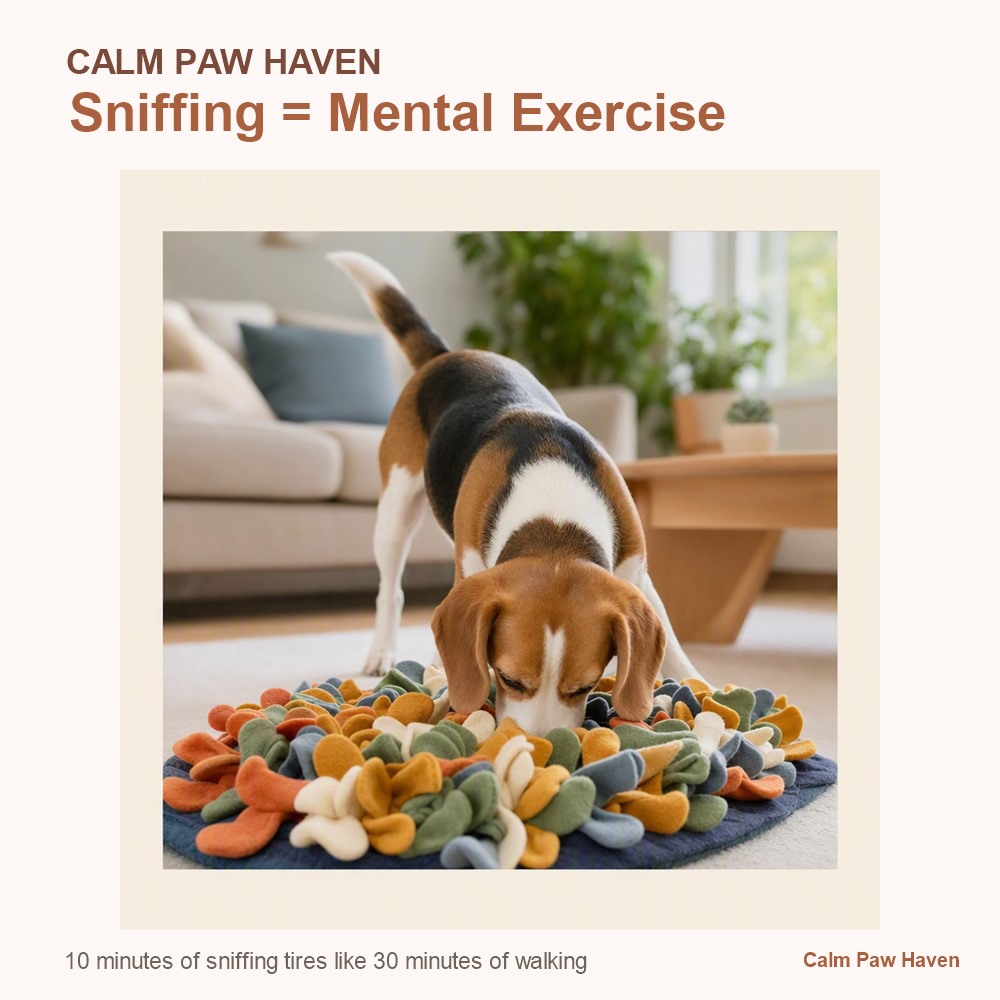
Snuffle Mats Explained: Why 10 Minutes of Sniffing Beats a Long Walk
You walk your dog for an hour. You get home. Twenty minutes later, they're pacing the hallway with a toy, bored again. Sound familiar? The missing piece isn't more exercise — it's more sniffing. Here's the counterintuitive science behind the snuffle mat, and how to use one properly.
The Nose That Runs the Dog
A dog's nose has up to 300 million scent receptors. Humans have about 6 million. A full third of a dog's brain is dedicated to processing smell — proportionally forty times more than ours. When your dog stops to sniff a lamppost for two minutes, they're not dawdling; they're reading the neighborhood news in detail most of us can't imagine.
That processing costs real energy. Canine researchers consistently find that 10-15 minutes of focused sniffing leaves dogs as satisfied as a 30-60 minute brisk walk. The walk tires the body; sniffing tires the mind. And a mentally tired dog is the calm, napping, non-shredding-the-couch dog we all want to live with.
What a Snuffle Mat Actually Is
A snuffle mat is a fabric mat with dense loops, strips or pockets where you hide dry food and treats. Instead of eating from a bowl in ninety seconds, your dog has to forage — nosing through the fabric, using scent to locate each piece, working for every kibble. It replicates what wild canids do for hours every day: search for food using their nose.
Dog trainers and veterinary behaviorists recommend them for a widening list of situations:
- Fast eaters — gulping food is linked to bloat risk and poor digestion; foraging slows intake to a natural pace
- Anxious and reactive dogs — sniffing lowers heart rate and triggers calming hormones; trainers use food-search games as "therapy homework"
- High-energy dogs on rest days — injured, post-surgery or stuck indoors on bad-weather days still need mental work
- Puppies — foraging builds confidence and scent skills during the critical socialization window
- Boredom destructiveness — a dog with a foraging job rarely needs to invent one (your shoes are not safe from a bored dog, but they are safe from a busy one)
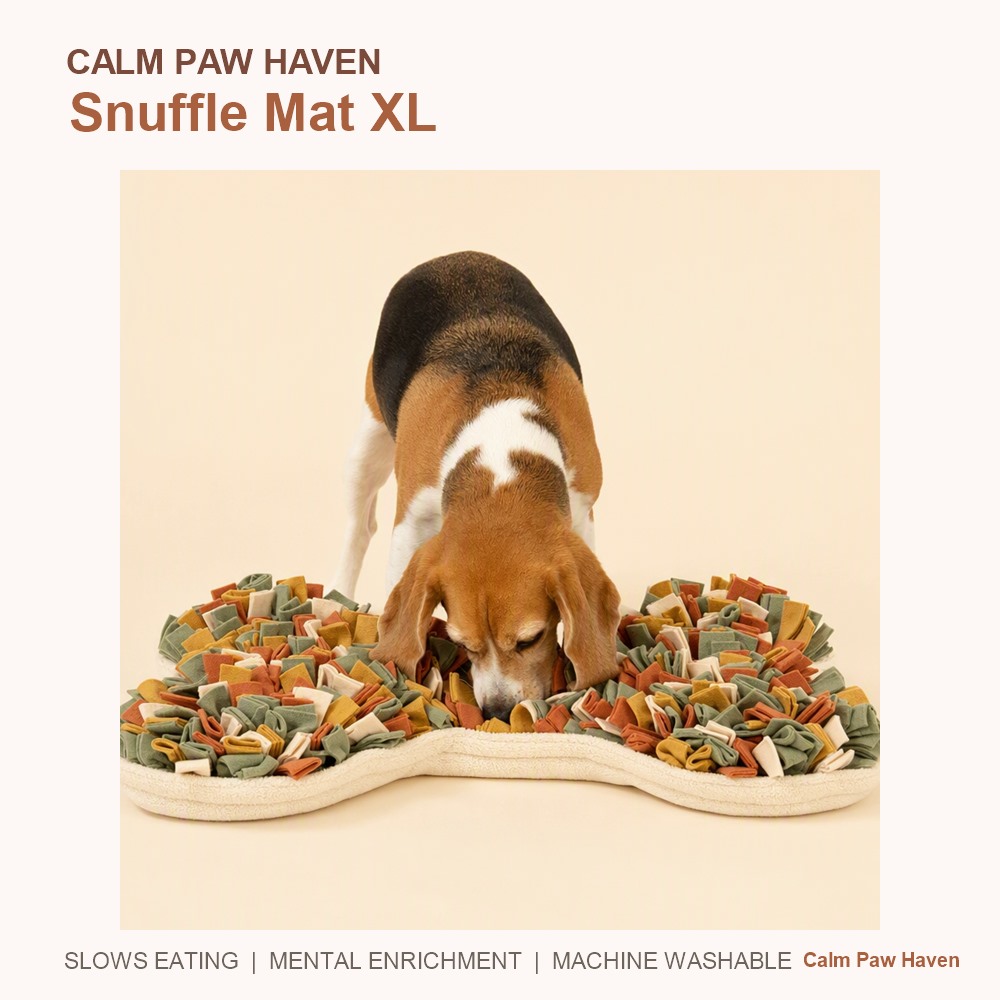
Flower Snuffle Mat
Dense fabric loops that hide kibble and treats of any size, on a non-slip base. Machine washable. Watch the real foraging video on the product page. Learn more →
How to Use One: A Beginner's Walkthrough
Day 1 — Make it easy. Sprinkle a handful of kibble loosely on top of the loops. The goal is an instant win: dog investigates, food appears, game understood. Skip this step with a shy dog and you may teach them the mat is confusing rather than fun.
Days 2-4 — Bury it. Now push pieces down between the fabric strips so they're hidden from view and only findable by nose. Feed one full meal this way. A bowl-fed dinner lasts 90 seconds; the same food in a snuffle mat keeps most dogs busy 10-15 minutes.
Ongoing — Level up. Once your dog is a confident forager, vary the difficulty: fold a treat inside a loop, use bigger pieces that take work to extract, or scatter the mat in a new room. Rotate with other puzzle feeders so the novelty never wears off.
Three Rules That Keep It Working
- Supervise the first sessions. Some dogs try to dig or chew the mat itself — calmly redirect to nosing, and end the session before frustration
- Measure the food. Whatever goes into the mat comes out of the daily ration. Foraging is enrichment, not extra calories
- Wash it regularly. Food residue in fabric attracts bacteria. Shake out crumbs after every use, and machine wash cold weekly-ish, then air dry
Sniffing Isn't Just for Dogs
Cats have 200 million scent receptors of their own, and indoor cats especially benefit from scent work. Hide a few high-value treats (freeze-dried chicken works) in the mat's loops and let your cat hunt. Many behaviorists recommend scent games as first-line enrichment for bored indoor cats — it's the same hunting sequence, minus the casualties.
The Bottom Line
A tired dog is a good dog — but "tired" doesn't have to mean "walked into the ground." Ten minutes of sniffing on a rainy Tuesday does more for most dogs than another lap of the same block. Give their nose a job, and the calm follows.
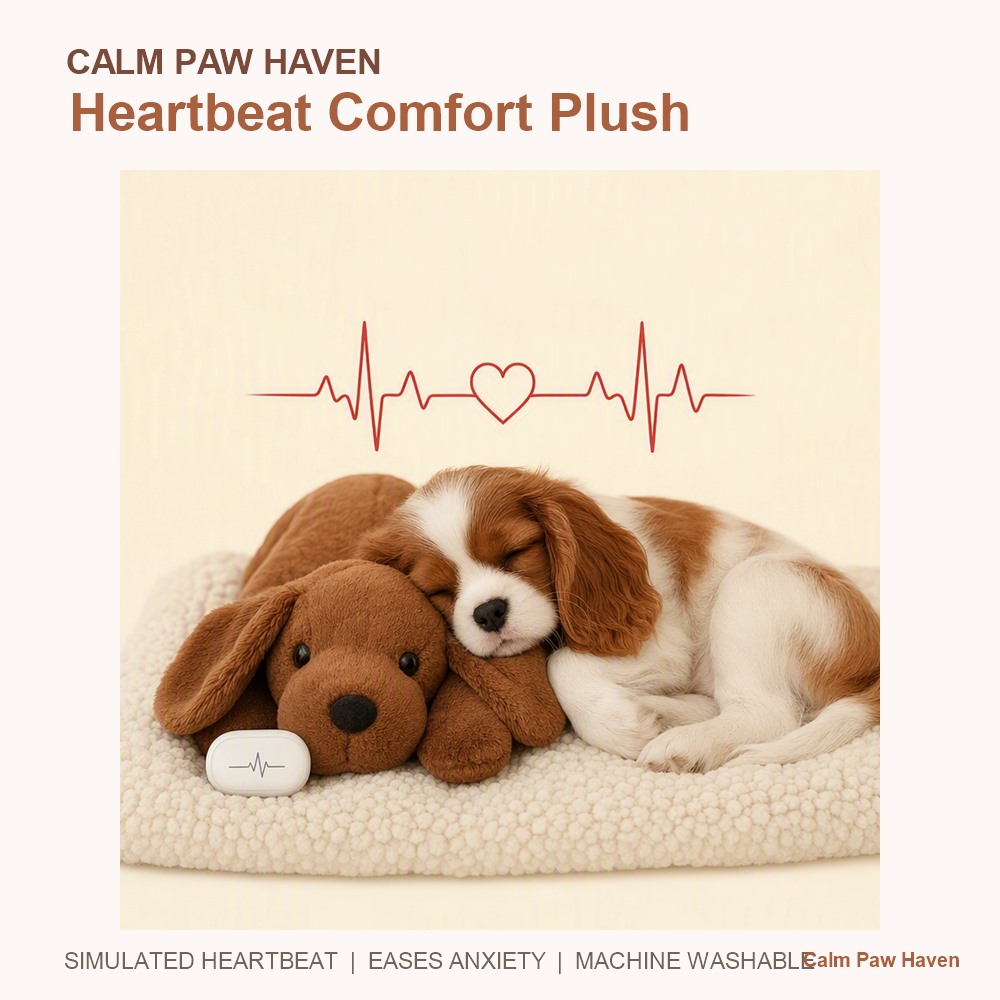
Pair It With: Heartbeat Comfort Plush
Forage to tire them out, then a simulated-heartbeat plush for the calm-down nap. The full relaxation routine. Learn more →