
Heartbeat Toys for Kittens & Cats: How They Work and When to Use One
A new kitten crying at night in her crate. An anxious cat hiding under the bed after a house move. A rescue who trembles through every thunderstorm. If any of these sound familiar, you've probably seen a heartbeat toy for cats mentioned in a rescue forum or by your vet — a soft plush with a simulated heartbeat tucked inside that claims to soothe like a littermate or mother's chest. But do they actually work, and is one right for your cat? Here's the honest guide.
What Is a Cat Heartbeat Toy?
A heartbeat toy (sometimes called a heartbeat plush or pulsing comfort toy) is a soft stuffed animal with a small battery-powered module inside that produces a rhythmic, heartbeat-like pulse — usually around 100-120 beats per minute, mimicking a resting cat's heart rate. Many add a gentle heat pack option. The combination of warmth + rhythmic pulse + something to curl against recreates the physical sensation of sleeping beside a mother or littermates.
They're best known for puppies — but kittens respond just as strongly. Kittens normally sleep piled on their littermates until 12 weeks of age, and a solo kitten separated from that pile misses it deeply. That's exactly the gap a heartbeat toy fills.
Why the Simulation Works: It's Not Magic, It's Biology
The calming effect rests on two well-understood mechanisms:
- Rhythmic entrainment: a slow, steady pulse encourages a cat's own heart rate and breathing to slow down toward it — the same reason a ticking clock comforts newborns and why slow petting calms a panicked cat better than fast petting.
- Comfort by contact (positive pressure): gentle, even pressure against the body is calming for most mammals. It's the principle behind weighted blankets for humans and swaddling for infants. A plush that a cat can lean on or drape a paw over provides that input all night.
What a heartbeat toy does not do: it isn't a sedative and it won't fix pain, illness, or territory conflict between cats. If your cat's anxiety is new, sudden, or severe, see a vet first — behavior changes are often the first visible sign of a medical issue.
When a Heartbeat Toy Helps Most
1. New kittens, especially solo kittens
The classic use case. A kitten who has just left mom and littermates faces her first nights alone in a strange home. A heartbeat toy for kittens gives her something warm to curl up against, and most settle within minutes instead of crying for hours. Breeders and rescues routinely send kittens home with one for exactly this reason.
2. The first nights in a new home
Cats bond to places as much as people. A move — or even a rearranged room — can shake a cat's sense of security for weeks. A familiar-smelling heartbeat plush becomes a portable "safe spot" that stays constant while everything else changes.
3. Storm, travel and vet-visit anxiety
A heartbeat plush placed in the carrier before a car ride or thunderstorm gives an anxious cat something predictable to focus on. Pair it with a treat and a calm voice — never force contact; let the cat choose to lie against it.
4. Rescue cats and shelter transitions
Cats from shelters often missed critical early socialization and carry generalized anxiety. Shelters increasingly put heartbeat toys in kennels because a sleeping cat presents calmer — and adopts faster — than a cat pacing and vocalizing.
5. Weaning off co-sleeping (yours, not theirs)
If your kitten has been sleeping on your chest and you'd rather she didn't, a warm heartbeat plush is the gentlest possible transition — the goal is that her comfort object becomes the toy, not your ribcage.
How to Choose the Best Heartbeat Toy for Your Cat
- Realistic pulse, not a buzz. Cheap modules vibrate sharply, which startles more than soothes. Look for a soft, low-frequency pulse at roughly 100-120 bpm.
- Machine-washable body, removable module. A cat plush will be drooled on, kneaded, and washed. The heartbeat unit must come out for laundering.
- Cat-appropriate size. Dogs do fine with big pillows; cats prefer something they can drape a paw over and partially curl around — roughly the size of an adult cat's torso or smaller.
- Quiet motor. Hold it in a quiet room first. If you can hear a whirring motor, your cat with hearing several times sharper certainly can.
- Safe stitching and no small parts. Watch for glued-on eyes, ribbons, or bean fills a determined kneader can open.
- Battery door that screws shut. Cats will find a snap-shut battery cover eventually. Screwed closures are non-negotiable for battery-operated cat toys.
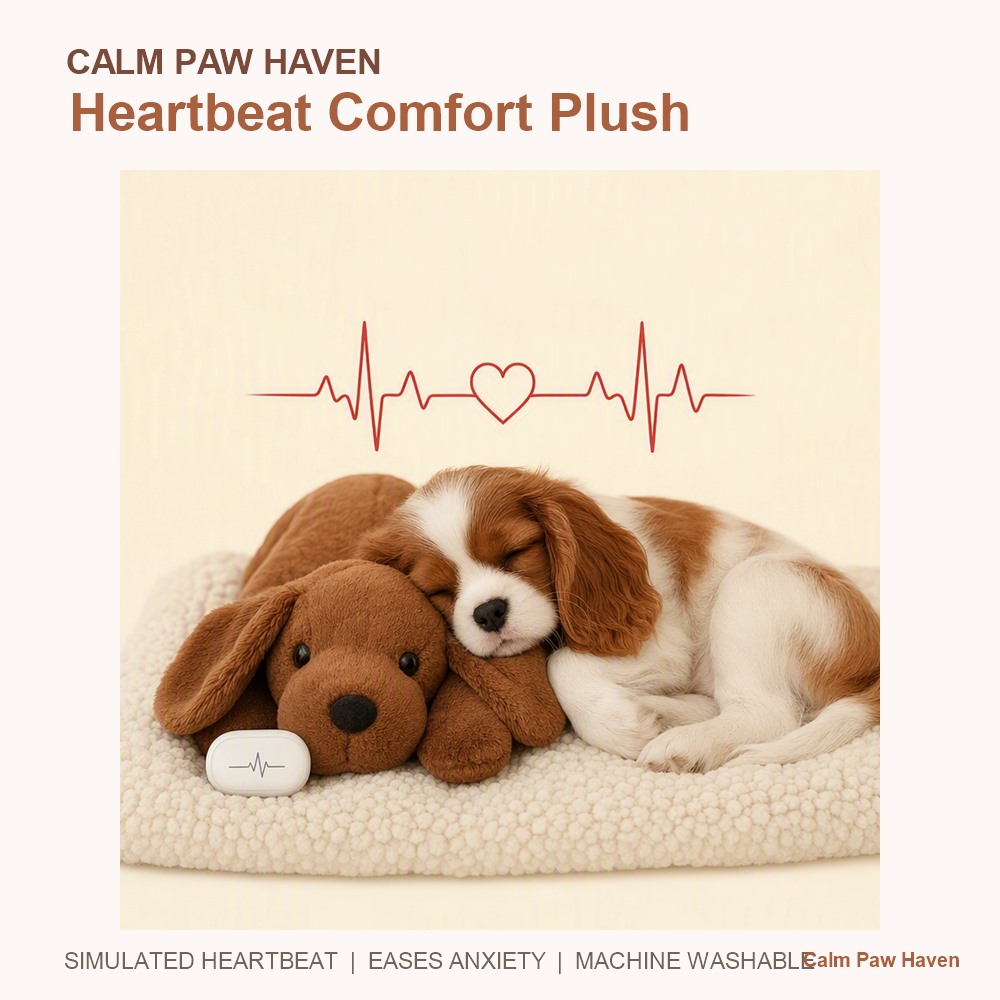
Heartbeat Comfort Plush
Our soft plush with a simulated heartbeat eases separation anxiety and helps kittens and anxious cats sleep through the night. Machine-washable, replaceable batteries, cat-sized. Learn more →
Introducing It: A 3-Step Plan
- Warm it first. Run the plush under warm water in a towel, or add a safe heat pack. Body temperature matters — a room-temperature plush is just a toy; a warm one reads as "alive."
- Place, don't present. Put it in the cat's chosen sleeping spot (crate, bed, the corner she already prefers) rather than holding it out to her. Let her discover it on her own terms.
- Add your scent. Lightly rub the plush on your hands or an unworn shirt. Your smell + warmth + pulse is the full "safe companion" signal.
Most kittens accept a heartbeat toy within one or two nights. Adult cats can take a week — leave it available without pressure and let curiosity do the work.
Common Questions
Do heartbeat toys work for adult cats, or only kittens?
Adult cats benefit too — the mechanism is age-independent — but kittens and newly rehomed adults show the most dramatic response. A confident, well-settled adult cat may ignore it entirely, and that's fine.
Can I leave it on overnight?
Yes, that's the typical use. A quality module runs 6-8+ days continuously on replaceable batteries. Turn it off when not needed to extend battery life.
My cat is scared of it — what now?
Some cats startle at the pulse at first contact. Turn the module off for a few days and let her bond with the plain plush; then reintroduce the heartbeat on a low-traffic day. Almost all cats accept it once the plush itself is familiar.
Is it a replacement for companionship?
No — a heartbeat toy is a comfort tool, not a companion. A solo kitten still needs daily play, handling, and interaction. Think of the plush as the calm anchor in between your sessions, not a substitute for them.
The Takeaway
Heartbeat toys are one of the few "calming" products with a clear biological logic behind them: rhythmic pulse plus gentle contact plus warmth. They're inexpensive, drug-free, and especially powerful for new kittens, rescues, moves, and storm anxiety. Combined with a predictable routine and real daily play, a heartbeat plush can genuinely change an anxious cat's nights — and yours.
Choosing a heartbeat toy for your kitten or cat? See our Heartbeat Comfort Plush → Questions about anxious-pet care? Message us — we reply within 24 hours.
Related reading: Do Cats Like Heartbeat Toys? — which cats take to them and how to introduce one without spooking. Bringing home a new kitten? Kitten's First Night Home: A Survival Guide covers the crying and the sleep setup step by step.